Fennel Seed Oil
75mg per servingCarminative oil that reduces gas formation and supports digestive comfort after meals.
Overview
What it is
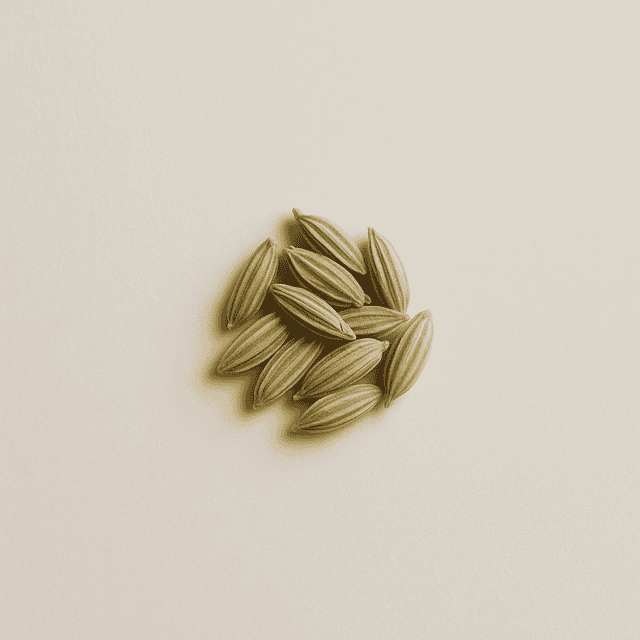
Fennel seed oil is extracted from the seeds of Foeniculum vulgare, a flowering plant in the carrot family. Its primary bioactive compound is trans-anethole (60–80% of the oil), along with fenchone and estragole. Fennel has been used for centuries across Mediterranean, Middle Eastern, and Indian traditional medicine as a carminative — a category of agents that prevent or reduce intestinal gas formation.
Mechanism
How it works
Trans-anethole relaxes the smooth muscle of the intestinal wall, allowing trapped gas to move through the GI tract rather than accumulating and causing distension. Fenchone acts as an antispasmodic, reducing the intestinal contractions that trap gas pockets. Together, these compounds promote the passage of gas while reducing the spasms that make gas painful. Fennel oil also has mild antimicrobial properties that may help modulate gas-producing bacteria in the gut.
Why it helps
Key benefits
Reduces intestinal gas accumulation through smooth muscle relaxation
Acts as a carminative to promote gas passage and reduce bloating
Provides antispasmodic support via fenchone
Clinically paired with curcumin phytosome for IBS symptom relief
Evidence
The research
The effect of fennel seed oil emulsion in infantile colic: a randomized, placebo-controlled study
Alexandrovich I, Rakovitskaya O, Kolmo E, et al. · Alternative Therapies in Health and Medicine (2003)
In a randomized, placebo-controlled trial, fennel seed oil emulsion significantly reduced colic symptoms in infants, demonstrating its antispasmodic and carminative properties in a clinical setting.
Curcumin and fennel essential oil improve IBS symptoms: a randomized clinical trial
Di Ciaula A, Portincasa P, Maes N, Albert A. · Journal of Gastrointestinal and Liver Diseases (2018)
The combination of curcumin phytosome and fennel essential oil produced significant improvements in IBS symptoms after 30 days, with reductions in abdominal pain, bloating, and overall symptom severity.
Foeniculum vulgare: pharmacological review and therapeutic applications
Badgujar SB, Patel VV, Bandivdekar AH. · BioMed Research International (2014)
Comprehensive review confirmed fennel's antispasmodic and carminative properties. Approved by the German Commission E for dyspeptic complaints, with trans-anethole and fenchone identified as the primary bioactive compounds.
Dosage
75mg per serving
Why this dose
The 75mg fennel seed oil dose matches the amount used in the clinical trial protocol combining fennel with curcumin phytosome for IBS symptoms. This dose provides sufficient trans-anethole for carminative effects while keeping within the range shown to be safe and effective in published research.
The formula
Why it matters
Gas is one of the most common causes of post-meal discomfort, and it occurs naturally as gut bacteria ferment undigested carbohydrates. Fennel seed oil addresses gas through a different mechanism than alpha-galactosidase (which prevents gas-producing sugars from reaching bacteria). While alpha-galactosidase prevents gas formation, fennel helps with gas that forms regardless — from any food, not just beans and legumes.
Works with
Curcumin Phytosome
Fennel and curcumin phytosome are paired following the clinical trial protocol that demonstrated significant IBS symptom improvement.
Alpha-Galactosidase
Alpha-galactosidase prevents gas formation from specific sugars, while fennel helps move and expel gas that forms from any source — complementary anti-bloating mechanisms.