Artichoke Leaf Extract
300mg per servingStimulates bile production to prepare your body for dietary fat digestion.
Overview
What it is
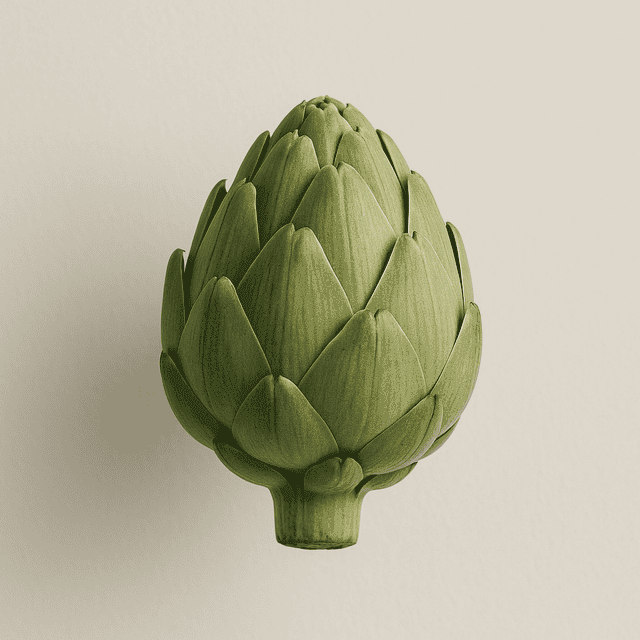
Artichoke leaf extract is derived from Cynara scolymus, a thistle-family plant cultivated in the Mediterranean for centuries. The extract is standardized to contain cynarin and chlorogenic acid, the bioactive compounds responsible for its digestive effects. Unlike the edible artichoke heart, the leaf contains significantly higher concentrations of these bitter compounds.
Mechanism
How it works
Cynarin and chlorogenic acid stimulate bile production in the liver (choleresis) and promote bile release from the gallbladder. Bile acts as a natural emulsifier, breaking dietary fats into smaller droplets so lipase enzymes can access them more efficiently. By increasing bile flow before a meal, artichoke leaf extract prepares the digestive system to handle incoming fats before they arrive in the small intestine.
Why it helps
Key benefits
Increases bile production and release before fat-heavy meals
Supports efficient emulsification and digestion of dietary fats
Reduces symptoms of functional dyspepsia including bloating and fullness
Provides hepatoprotective antioxidant activity
Evidence
The research
Efficacy of artichoke leaf extract in the treatment of patients with functional dyspepsia
Holtmann G, Adam B, Haag S, et al. · Alimentary Pharmacology & Therapeutics (2003)
In a randomized, double-blind, placebo-controlled multicentre trial of 247 patients with functional dyspepsia, ALE significantly reduced symptom severity scores (8.3 vs. 6.7, P < 0.01) and improved disease-specific quality of life over 6 weeks.
Increase in choleresis by means of artichoke extract
Kirchhoff R, Beckers C, Kirchhoff GM, et al. · Phytomedicine (1994)
In a controlled trial with healthy volunteers, 1.92g standardized artichoke extract administered into the duodenum significantly increased liver bile flow, confirming the choleretic (bile-stimulating) mechanism of artichoke in humans.
Artichoke leaf extract reduces mild dyspepsia in an open study
Marakis G, Walker AF, Middleton RW, et al. · Phytomedicine (2002)
In an open study of 516 healthy adults with self-reported dyspepsia, ALE produced an average 40% reduction in global dyspepsia score with significant quality-of-life improvements, even at doses as low as 320mg daily.
Ginger and artichoke extract supplementation on functional dyspepsia: a randomised, double-blind, placebo-controlled clinical trial
Giacosa A, Guido D, Grassi M, et al. · Evidence-Based Complementary and Alternative Medicine (2015)
In a randomized, double-blind trial of 126 patients, the ginger-artichoke combination achieved 86.2% treatment efficacy vs. 52.5% placebo after 28 days, with marked symptom reduction in 63.1% of treated patients. Effects visible within 14 days.
Dosage
300mg per serving
Why this dose
Clinical trials demonstrating significant reductions in dyspepsia symptoms used daily doses of 320–640mg of standardized artichoke leaf extract. The 300mg per-meal dose in Feast falls within this effective range when used consistently, matching the dose shown to stimulate bile flow without causing GI discomfort.
Safety & tolerability
Artichoke leaf extract is well-tolerated in clinical studies. Those with bile duct obstruction or gallstones should consult a physician before use, as increased bile flow may be contraindicated.
The formula
Why it matters
Fat is the slowest macronutrient to digest, and insufficient bile is one of the most common causes of post-meal bloating and heaviness. By stimulating bile flow before the meal arrives, artichoke leaf extract gives your digestive system a head start on the hardest part of digestion. It works synergistically with lipase in the after-meal formula — bile emulsifies fats, then lipase breaks them down.
Works with
Lipase
Artichoke stimulates bile to emulsify fats, then lipase breaks the emulsified fats into absorbable fatty acids — a two-step fat digestion system.
Gentian Root Extract
Both are digestive bitters that prime different aspects of digestion — gentian stimulates stomach acid while artichoke stimulates bile flow.